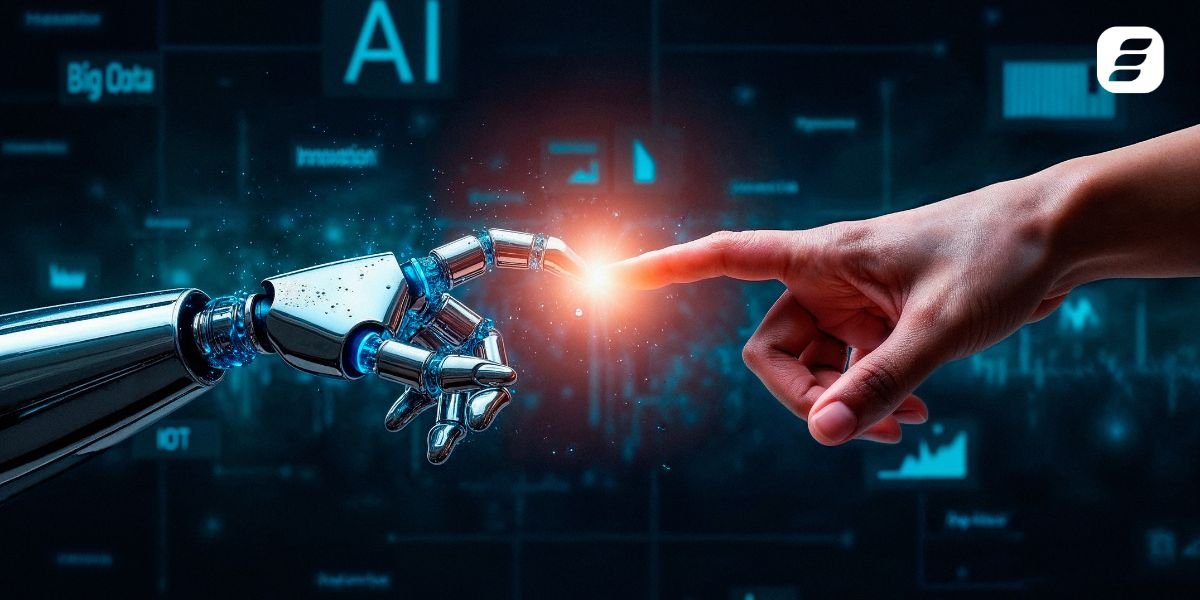
Regardless of how advanced AI systems get, they can never replace humans as they lack certain core problem solving characteristics, real world analytics, emotional intelligence, and core experience. AI is revolutionizing product design at an unparalleled pace, with the ability to create designs, write code, and support creative workflows in ways previously unimaginable. This swift progress prompts an important question. Is it appropriate for AI to take over the role of product managers?
The answer is a definitive no, as the future of outstanding product management does not involve AI supplanting human creativity. Instead, it should focus on a collaborative relationship where AI enhances, rather than controls, the creative process. Product managers bear an ethical obligation to find the right equilibrium—utilizing AI's effectiveness while maintaining the human insight that imparts significance to products.
AI and Humans: A Healthy Balance
Human Strengths
- ● Contextual understanding and cultural awareness
- ● Ethical judgment and emotional intelligence
- ● Storytelling and intuitive problem-solving
- ● Novel creativity and big-picture thinking
AI Strengths
- ● Pattern recognition and data-driven insights
- ● Speed, consistency, and large-scale optimization
- ● Generating diverse alternatives and predictive modeling
- ● Repetitive task automation and technical precision
Before incorporating AI into design workflows, teams must first establish the following:
- ● A clear map of existing processes—identifying where AI can enhance human capabilities rather than replace them.
- ● Explicit ethical boundaries—ensuring AI serves as a support system, not an independent decision-maker.
- ● Guiding principles for AI in design—AI should function as an enhancer of human expertise, not a replacement.
Utilizing AI to manage products will enable product managers to concentrate on high-value activities such as user research and ideation—domains where human expertise is irreplaceable.
Benefits of AI in Product Management
AI is transforming contemporary product management operations by improving efficiency, accuracy, and cost-effectiveness. Its capability to automate tasks, analyze extensive datasets, and function continuously is reshaping business operations and allowing employees to concentrate on more strategic initiatives.
AI greatly enhances product management through the automation of numerous tasks. It is proficient in swift data processing and analysis, managing large datasets significantly quicker than humans.
AI systems exhibit remarkable levels of accuracy and precision, minimizing error rates in activities such as data entry and calculations. In sectors like manufacturing and quality control, AI-driven inspection systems can detect flaws that may be overlooked by human inspectors, greatly enhancing quality assurance.
One of the most compelling benefits of AI is its potential to cut costs. By automating repetitive tasks, companies can reduce labor costs and allocate resources more efficiently. Insights generated by AI assist in optimizing resource distribution, ensuring effective use of both human and technological resources.
Human Touch in Product Management
Humans have an inherent ability to create new ideas and solutions, making creativity a core strength in product management. This innovative capacity enables individuals to think creatively and adjust to unexpected situations, whether it involves developing new products, enhancing processes, or discovering unique methods to engage customers. In contrast to AI, which depends on pre-existing data and patterns, human creativity flourishes through intuition and imagination, allowing teams to break boundaries and venture into unexplored areas.
Emotional intelligence is a distinctly human characteristic that is vital for establishing relationships with clients and colleagues. This skill to comprehend and regulate emotions nurtures trust and teamwork in the workplace. Offering empathetic customer service is another domain where humans shine; empathy enables employees to relate to customers personally, effectively meeting their needs. Furthermore, navigating intricate social dynamics within teams necessitates a sophisticated understanding of interpersonal relationships, which AI cannot imitate.
Human product managers excel in critical thinking and complex problem-solving, which are crucial for evaluating nuanced situations and making well-informed decisions. In a constantly evolving business environment, employees must devise strategies to tackle multifaceted challenges that may not have simple solutions. This skill set is especially important in high-pressure situations where quick decision-making and adaptability are essential for achieving success.
Striking a Balance between AI and Humans
Achieving peak productivity necessitates a strategic equilibrium between AI and human abilities. By pinpointing tasks appropriate for each and promoting collaboration, organizations can enhance efficiency and foster innovation. Finding this equilibrium guarantees that both AI technologies and human talents are effectively employed to propel success.
To enhance productivity, it is crucial to discern which tasks are most suitable for AI as opposed to those that necessitate human involvement. AI is particularly adept at handling data-driven, repetitive tasks like data entry or basic analysis, whereas human capabilities excel in creative, interpersonal, and critical tasks that demand emotional intelligence and innovative thought.
Effective collaboration between AI and humans hinges on strategic planning. Equipping employees to work in tandem with AI systems can boost their capabilities while ensuring they stay relevant in the job market. Restructuring job roles to emphasize uniquely human skills will enable employees to effectively harness their strengths. Cultivating a culture of ongoing learning and adaptability will also support organizations in thriving within an increasingly automated landscape.
Various industries have adeptly incorporated AI into their operations while preserving human participation. For example, in the healthcare sector, AI aids doctors by scrutinizing medical data and offering insights, which allows physicians to concentrate on patient care. Likewise, in marketing, solutions created by Spunch.ai assist brands in analyzing consumer behavior while allowing room for human creativity to develop impactful campaigns.
Forging a Symbiotic Relationship
The future workforce is expected to witness a collaboration between humans and AI, forming a symbiotic relationship that enhances the capabilities of both parties. This partnership has the potential to boost productivity and foster new avenues for innovation across different sectors.
Forecasting the evolution of AI and its impact on the workforce: AI is anticipated to take over more tasks, allowing humans to concentrate on creative and strategic functions. This transformation will alter job structures, leading to new opportunities that merge human insight with technological expertise.
Enhancing human capabilities and generating opportunities: AI not only automates processes but also improves human decision-making, creativity, and efficiency. By harnessing the strengths of AI, individuals can uncover new possibilities and propel innovation across various fields. Addressing ethical considerations in AI development: As AI becomes a fundamental part of workplaces, it is crucial to tackle ethical issues. Organizations must emphasize fairness, transparency, and accountability in AI systems to ensure they serve society positively while reducing potential risks.
Challenges and Concerns in Integrating AI in Product Management
The incorporation of AI in workplaces presents several challenges, including fears of job loss, algorithmic biases, and concerns regarding data security. It is crucial to address these issues for effective implementation. Organizations need to proactively confront these challenges to facilitate a seamless transition into an AI-enhanced work environment.
Confronting fears of job loss due to AI: The apprehensions surrounding job loss from AI are legitimate but can be alleviated by highlighting the emergence of new roles associated with AI implementation and maintenance. As companies embrace advanced technologies, new opportunities will emerge for employees to shift into these roles. Offering retraining and upskilling programs ensures that workers can adjust to evolving job demands while continuing to be valuable assets.
Addressing potential biases in AI algorithms: Algorithmic biases in AI can result in unjust outcomes; thus, it is vital to utilize diverse and representative datasets during the training of AI systems. Establishing oversight and monitoring processes can aid in the early detection of biases, enabling organizations to tackle them proactively before they affect decision-making.
Concerns regarding data security and privacy in AI implementation: As organizations incorporate AI systems into their workflows, prioritizing data security and privacy is essential. Developing strong security measures and ensuring adherence to regulations will safeguard sensitive data while building trust among both employees and customers.
Finding the right balance between AI and humans can be quite challenging for AI product managers. At Eduinx, we help bridge that gap through our AI product management course. With the guidance of our non academic mentors, you can get a clear understanding of how to implement AI in product management and find the optimum balance by bridging human creativity and AI efficiency seamlessly. We also offer placement support and help you land the right job at an attractive salary package. Learn more about our course here.