
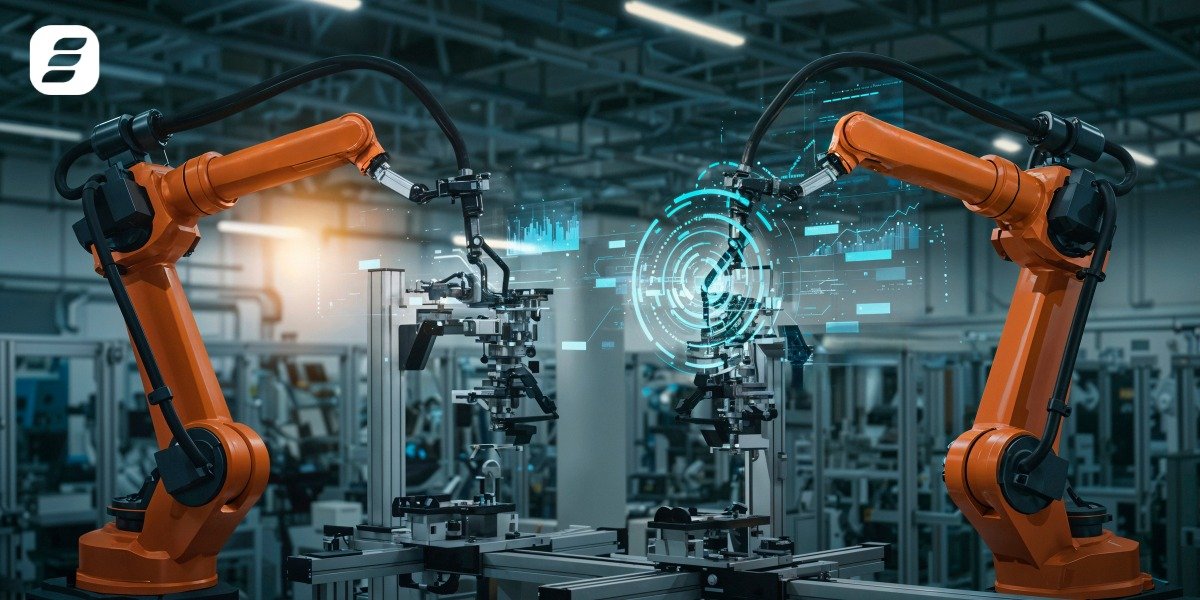
Artificial intelligence has moved beyond the boundaries of research laboratories and has become a part of our daily existence. What was once merely a concept in science fiction is now a swiftly advancing reality. Whether in the workplace, at home, or while traveling, AI technologies are already influencing our lifestyles—and they will continue to do so in even more significant ways.
Advancements in artificial intelligence are consistently shaping the future of humanity across almost every sector. AI is currently the primary catalyst for emerging technologies such as big data, robotics, and the Internet of Things (IoT), while generative AI has further broadened the scope and appeal of AI.
Advancements in artificial intelligence are consistently shaping the future of humanity across almost every sector. AI is currently the primary catalyst for emerging technologies such as big data, robotics, and the Internet of Things (IoT), while generative AI has further broadened the scope and appeal of AI.
Influence of AI in the Present World
Numerous professionals utilize AI on a daily basis—often without even being aware of it. Voice assistants such as Siri, Alexa, or Google Assistant serve as the most apparent examples. However, AI is also active in many less noticeable domains:
Search And Research: Contemporary search engines and research tools are driven by sophisticated AI, including large language models (LLMs) like ChatGPT or Google's Gemini. AI systems create summaries, recommend pertinent sources, and even synthesize insights from various documents, fundamentally transforming how we search, learn, and acquire knowledge.
Healthcare: AI is revolutionizing medical diagnostics, from examining X-rays to detecting rare diseases and expediting drug development—often with greater speed and precision than humans.
Finance And Consumer Services: Fraud detection, credit scoring, and customer service chatbots are just a few instances of how financial institutions leverage AI to enhance efficiency and mitigate risk.
Customer Service And Support: Behind numerous live chats and support hotlines are AI-driven agents capable of managing basic inquiries, troubleshooting, and directing users more effectively. These systems minimize wait times and lower costs for businesses—though sometimes at the cost of human nuance.
Marketing: From generating ideas to optimizing campaigns, artificial intelligence has become an essential ally in the advertising sector. AI-generated influencers and virtual models are also gaining immense popularity on platforms like Instagram, where they assist in promoting brand messaging.
Positive Impact of Generative AI in the Industry
Personal Finance And Wealth Coaching: AI advisors have the potential to assist in managing investments, budgets, and financial habits in real time, providing tailored guidance. Financial planning may become more inclusive, yet it will also depend increasingly on algorithmic trust.
Legal Automation And Justice: AI is expected to aid in legal research, contract analysis, and even case forecasting, thereby accelerating access to justice. Nonetheless, the principles of fairness and due process should remain under human oversight.
Climate Action: Among the effective tools in combating ecological collapse, AI could play a role in predicting natural disasters, enhancing renewable energy efficiency, and monitoring environmental harm in real time.
Security And Cyber Defense: As digital infrastructure becomes more intricate, AI is likely to serve as a crucial defense mechanism in identifying cyber threats, spotting anomalies, and responding to attacks in real time—though it may also facilitate the next wave of advanced cyberattacks.
Aging And Elder Care: AI-driven assistants, monitoring systems, and companion robots could support older adults in maintaining their independence for a longer duration. From medication reminders to fall detection and emotional support, AI has the potential to alleviate pressure on healthcare systems and enhance the quality of life in aging populations.
Using AI Responsibly
AI represents a transformative force. With significant power comes significant responsibility. We must proactively address concerns related to data privacy, algorithmic bias, control of autonomous systems, and their effects on democracy and employment.
It is our responsibility—as a society and as individual leaders—to ensure that AI benefits humanity, rather than the reverse.
Finding the right equilibrium starts with recognizing that AI is more than just a tool—it is a system that exerts influence. Business leaders need to understand that every algorithm embodies the assumptions, data, and incentives that shaped it.
This is why one of the most impactful actions a company can undertake is to integrate ethical considerations into the AI lifecycle from the very beginning—from data gathering and model training to deployment and evaluation of impacts. For instance, we have established internal AI review checkpoints that assess not only performance metrics but also unintended effects like bias amplification or misuse of data.
Accelerating Innovation in the Industry
AI has the potential to speed up innovation across various sectors by enhancing human creativity and uncovering opportunities that were previously hidden. The ability to conduct data-driven analysis at an impressive scale and speed is providing insights that would be unattainable for humans to find on their own. AI systems are capable of sifting through extensive databases of information to pinpoint promising research paths or unexplored business opportunities. Additionally, they can aid in workforce planning, assisting large companies in categorizing and evaluating the current skills of their workforce.
From the perspective of talent management, AI technologies have shown proficiency in helping HR departments determine which skills their employees may require in the future, thereby increasing overall agility. In today’s business environment, this agility could be as valuable as any specific skill set. As the demands of particular tasks evolve rapidly, the ability to learn continuously and adapt to changing markets may become crucial for long-term career advancement. Workers who are self-directed and adaptable are likely to devise innovative solutions to current challenges.
The transition towards more comprehensive and creative human roles also creates opportunities for higher-order innovation, whether through interdisciplinary connections or a more profound investigation of topics. The most successful organizations are intentionally structuring workflows to optimize the amount of time humans spend on these high-value creative endeavors.
Now that you have understood the nuances of how AI is shaping the future, you can land your dream job as an AI data scientist or a generative AI expert. At Eduinx, we will help you understand complex AI concepts through a simple method. Our non academic mentors will guide you in performing capstone projects and provide placement assistance. Get in touch with us for more information on our PG diploma in generative AI and data science course.


