In 2026, generative AI (Gen AI) has transitioned from a phase of experimentation to widespread enterprise deployment. What started as standalone proof-of-concept models in 2023 has evolved into robust data science pipelines that facilitate everything from autonomous customer support to predictive product design.
Leading companies—such as Amazon, Microsoft, NVIDIA, and JPMorgan Chase—are no longer questioning whether they can utilize Gen AI, but rather how to implement it efficiently across their data ecosystems. The solution is found in scalable Gen AI pipelines: frameworks that integrate data engineering, model orchestration, and continuous learning to provide dependable, cost-effective intelligence. Here are ways how companies build a scalable Gen AI infrastructure.
Setting up a Unified Data Infrastructure
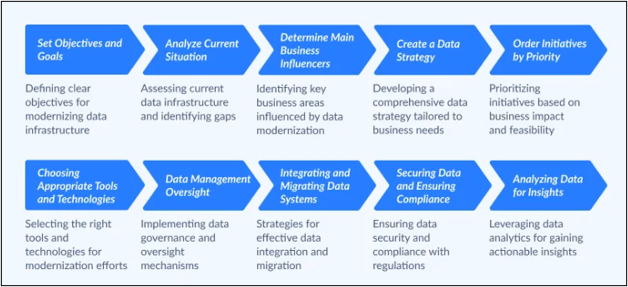
The initial phase in scaling Gen AI involves data unification. Organizations have come to understand that fragmented data silos hinder model performance.
- Data Lakehouses: These systems combine the adaptability of data lakes with the governance of warehouses, facilitating seamless access to both structured and unstructured data.
- Vector Databases: Solutions such as Pinecone, Weaviate, and Milvus have become commonplace. They enable the efficient storage and retrieval of embeddings from LLMs, driving retrieval-augmented generation (RAG) workflows.
- Real-Time Streaming: Technologies like Kafka and Azure Event Hubs are utilized to supply live data to Gen AI models, ensuring that outputs are aligned with the most current business context.
This cohesive infrastructure guarantees that AI models are not merely trained once but are continuously refreshed with new, pertinent data.
Orchestrating Models to Transform Gen AI
Scaling Generative AI necessitates the coordination of various models—large language models, vision transformers, and specialized fine-tunes—across distributed systems.
- Multi-Agent Systems: Enterprise AI teams implement agentic architectures, where dedicated models perform tasks such as summarization, reasoning, and data validation.
- Workflow Engines: Platforms like LangChain, Airflow, and Kubeflow have emerged as essential tools for orchestration. They oversee dependencies, retries, and version control for intricate AI workflows.
- Containerization & Microservices: Organizations leverage Kubernetes and Docker to deploy models as microservices, allowing for flexible scaling in response to demand.
This orchestration layer converts Generative AI from a singular model into a network of intelligent agents, each fine-tuned for a particular role.
Compliance with Data Governance and Scaling Responsibility
With significant scale comes significant responsibility. By 2026, data governance will be essential—it will serve as a competitive edge.
- Synthetic Data Validation: Organizations are utilizing Gen AI to create synthetic datasets for training purposes, with 41% now implementing validation models to identify bias or drift prior to deployment.
- Privacy-Preserving AI: Practices such as federated learning and differential privacy have become standard. Financial institutions have reported a 52% decrease in compliance incidents following the adoption of these methods.
- Explainability Dashboards: Tools like Fiddler AI and Arize have become crucial, enabling teams to visualize model reasoning and maintain transparency for regulators and stakeholders.
By integrating governance into the pipeline, companies can ensure that scalability does not undermine ethics or compliance.
Continuous Learning and Feedback Loops
Static models are no longer effective. The most successful organizations have developed feedback-driven pipelines that adapt based on user interactions and operational results.
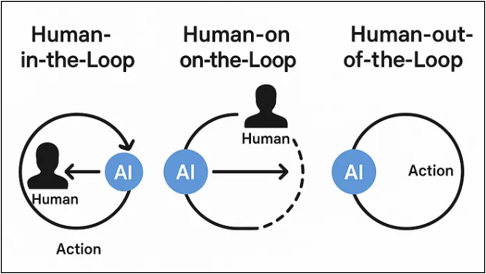
- Human-in-the-Loop (HITL): Enterprises incorporate human oversight into Generative AI workflows, particularly for critical decisions.
- Reinforcement Learning from Human Feedback (RLHF): Previously confined to research environments, RLHF has become widely adopted. It enables models to enhance their responses based on actual feedback from the real world.
- Auto-Retraining Pipelines: Through MLOps frameworks, models are automatically retrained whenever their performance metrics fall below established thresholds.
This ongoing learning process guarantees that Generative AI systems progress in tandem with business requirements, ensuring they remain relevant and precise.
Optimizing Costs
Operating large models can be costly; however, leading companies have effectively managed expenses through intelligent engineering practices.
- Model Distillation: Enterprises utilize smaller distilled versions of large models in production, achieving reductions in inference costs of up to 70%.
- Caching & Token Optimization: By caching embeddings and refining prompt tokens, organizations minimize unnecessary computations.
- Hybrid Cloud Deployment: Workloads are distributed between on-premises GPUs and cloud instances, optimizing both cost and performance.
Business System Integration
Scalable Gen AI pipelines are not standalone; they are intricately connected with enterprise systems.
- CRM & ERP Integration: Salesforce and SAP have introduced native Gen AI connectors, which facilitate real-time insights derived from customer and operational data.
- APIs for Decision Support: AI-generated outputs are directly integrated into dashboards and workflows, enabling managers to respond to insights immediately.
- Cross-Functional Collaboration: AI pipelines are collaboratively managed by data science, engineering, and product teams, ensuring that technical capabilities align with business strategies.
This integration elevates Gen AI from a backend tool to a frontline decision-making engine.
Reliability and Security
As Generative AI pipelines grow, the importance of security escalates.
- Prompt Injection Defense: Organizations are now implementing prompt sanitization layers to thwart malicious input manipulation.
- Model Monitoring: Ongoing anomaly detection guarantees that models remain stable and do not generate unsafe outputs.
- Redundancy & Failover: Deployments across multiple regions ensure continuous operation even in the event of infrastructure failures.
These protective measures enhance the resilience of Generative AI pipelines, allowing them to manage billions of requests while maintaining integrity.
In 2026, the frontrunners of the Gen AI revolution adhere to a common principle: scale holds no value without reliability, governance, and measurable outcomes. Scalable Gen AI pipelines extend beyond merely larger models; they encompass more intelligent architectures, ongoing learning, and ethical implementation. As AI evolves into the central nervous system of contemporary businesses, those who excel in pipeline scalability will shape the forthcoming decade of innovation.
The key takeaway here is to develop pipelines that learn, adapt, and scale in a responsible manner and you will create the future of intelligent enterprises.
Top Companies that have Built Scalable gen AI and Data Science Pipelines
Here are three examples of how top companies have achieved success by building scalable gen AI and data science pipelines.
Radixweb is a company that specializes in enterprise data engineering solutions.
- 1. The company constructs AI-ready data infrastructures that transform fragmented data into scalable, analytics-driven ecosystems.
- 2. Radixweb designs cloud-native data lakes, modern data warehouses, and lakehouse architectures, while also developing robust ETL/ELT pipelines and real-time processing systems across AWS, Azure, and GCP.
- 3. In this way, they have achieved data modernization, governance frameworks, pipeline automation, and AI/ML enablement, effectively converting raw enterprise data into dependable, decision-ready assets.
DataForest.ai is a leading pioneer in data science solutions
- 1. focusing on AI-powered data management and automation.
- 2. Their platform assists organizations in consolidating various data sources, streamlining pipeline workflows, and facilitating self-service analytics.
- 3. With robust AI integration capabilities, DataForest.ai enhances data preparedness for machine learning and predictive insights.
Analytics8 is a consulting firm specializing in data and analytics, focused on creating enterprise-grade data platforms, analytics dashboards, and governance frameworks.
- 1. Renowned for its technical expertise in data modeling, warehousing, and business intelligence solutions, Analytics8 assists organizations from various sectors in enhancing their data maturity and insights.
- 2. With a commitment to excellence, Analytics8 empowers businesses to leverage their data effectively.
Conclusion
Now that you have understood the nuances of creating a scalable Gen AI data science pipeline, it is time for you to deep dive into building one yourself. At Eduinx, a leading edtech institute in India, we offer both virtual classroom and offline learning to help you get familiarized with scalable generative AI. Take up our post graduate program in gen AI and data science and land your dream job. This course is also designed for business entrepreneurs as we guide you on how to build a scalable gen AI data science pipeline for your company. Get in touch with us to know more.
Frequently Asked Questions
What is a scalable Gen AI data science pipeline?
A scalable Gen AI data science pipeline is an enterprise AI workflow that connects data ingestion, data quality, model orchestration, vector search, evaluation, monitoring, and human feedback into one continuous system. Unlike a one-time model deployment, it supports repeatable AI development, automated updates, cost control, governance, and reliable business use cases across departments.
Why do enterprises need unified data infrastructure for Gen AI in 2026?
Enterprises need unified data infrastructure because Gen AI models perform better when they can access accurate, updated, and connected business data. Data lakehouses, vector databases, real-time streaming systems, and governance layers help reduce data silos and prevent AI outputs from becoming outdated, incomplete, or inaccurate.
How do multi-agent systems improve Gen AI workflows?
Multi-agent systems improve Gen AI workflows by assigning different AI agents to specialized tasks such as research, data retrieval, reasoning, validation, and execution. This makes complex workflows more efficient than relying on a single large language model. In enterprise environments, multi-agent systems are useful for customer support, analytics, operations, software development, and automated decision support.
How can companies reduce Gen AI inference cost at scale?
Companies can reduce Gen AI inference cost by using model distillation, smaller task-specific models, prompt optimization, response caching, embedding caching, batching, model routing, and hybrid cloud infrastructure. These practices help enterprises balance performance, speed, accuracy, and cost when running Gen AI applications for thousands or millions of users.
How can Gen AI be applied to CRM and ERP systems?
Gen AI can be applied to CRM and ERP systems by connecting AI models with customer, sales, finance, supply chain, and operational data. This allows teams to generate summaries, forecasts, recommendations, customer insights, workflow automation, and decision-support dashboards directly inside tools such as Salesforce, SAP, Microsoft Dynamics, and other enterprise platforms.
What is a Human-in-the-Loop pipeline in Gen AI?
A Human-in-the-Loop pipeline is a Gen AI workflow where human reviewers validate, correct, approve, or improve AI outputs at important decision points. It is especially useful for high-stakes use cases such as finance, healthcare, hiring, compliance, legal review, and enterprise decision-making, where accuracy, accountability, fairness, and trust are critical.